Module - 2 User Experience Design
2026-08-07 13:29
Tags: #desgin
Author: Duke Hsu
Topic
- Definition
- Factors that Influence User Experience
- Areas Related to Building User Experience
- User Experience and Usability
1.0 User Experience Design Definition
- It is about the user experience
- In IT industry , user experience (UX) refers to the overall experience users have while interacting with a system.
- The satisfaction of the user's needs from the system
My own opinion - UX has a direct impact on user retention. - UX is an important metric for evaluating business goals and product success. - As designers, we should think from the user's perspective while also considering business needs.
2.0 Factors that Influence User Experience
2.1 User Experience Honeycomb
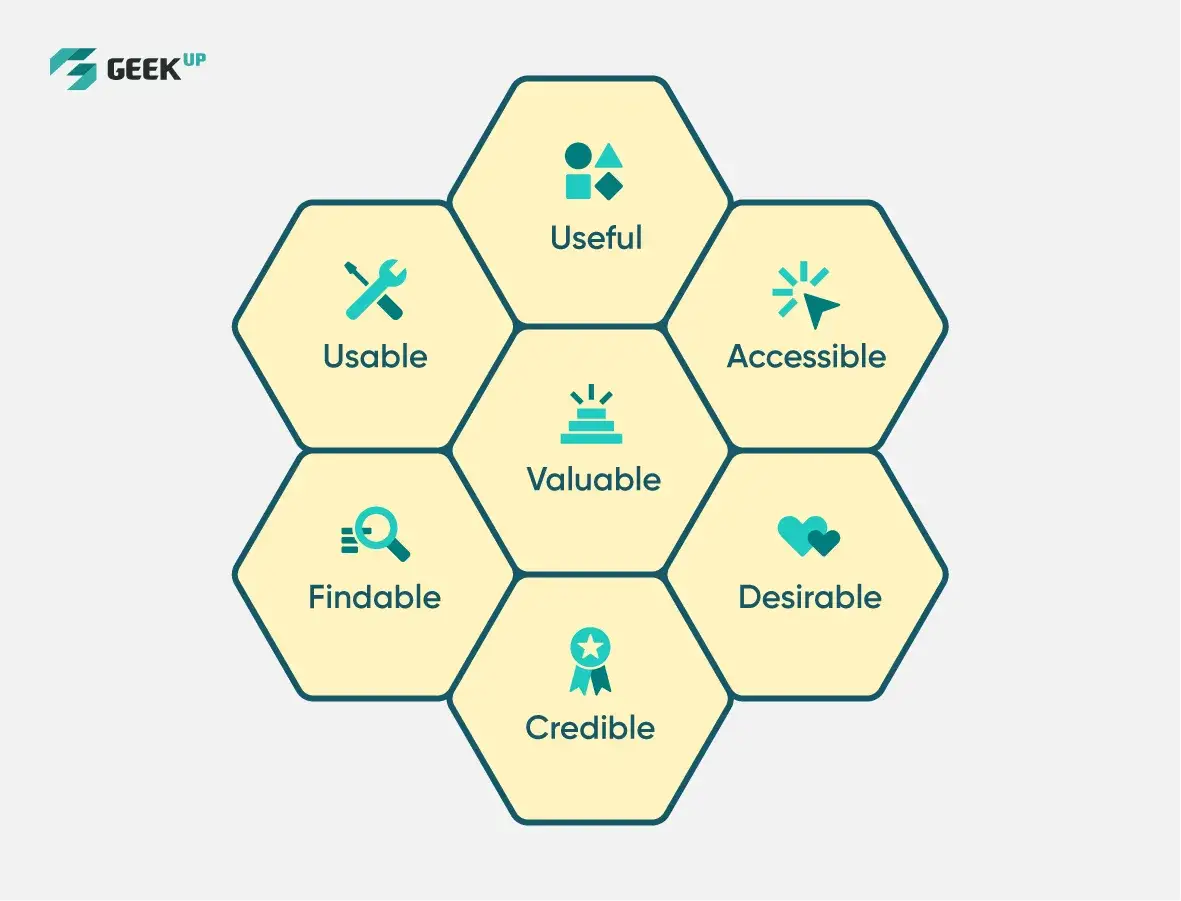
Useful - Solutions should be creative and innovative to fulfill the need
Usable - Solutions should be easy to use
Desirable - Use of emotional design to make the solution attractive and enticing
Findable - Solutions should be navigational in which information in the solution can be easily found
Accessible - Solutions should be designed also for people with disabilities
Credible - Provided information and executed processes by the solution is true and believable
Valuable - Solution must provide benefits that are beyond the expectations of the users
3.0 Areas Related to Building User Experience
3.1 The Areas
Project Management
- It focuses on planning and organizing a project and its resources.
User Research
- It focuses on understanding user behaviors, needs, and motivations through observation techniques, task analysis, and other feedback methodologies.
Usability Evaluation
- If focuses on how well users can learn and use a product to achieve their goals . It also refers to how satisfied users are with that process.
User Interface Design
- It focuses on anticipating what users might need to do and ensuring that the interface has elements that are easy to access, understand , and use to facilitate those actions.
Information Architecture (IA)
- It focuses on how information is organized , structured , and presented to users.
Interaction Design
- If focuses on creating engaging interactive systems with well thought out behaviors
Visual Design
- It focuses on ensuring an aesthetically pleasing interface that is in line with brand goals.
Content Strategy
- It focuses on writing and curating useful content by planning the creation, delivery and governance behind it.
Accessibility
- It focuses on how a disabled individual accesses or benefits from a site, system or application . Section 508 is the governing principal for accessibility.
Web Analytics
- If focuses on the collection, reporting , and analysis of website data .
The Areas Summary
-
When you design something, the first step is planning and organization. You also need to consider the project resources.
-
Then, you conduct research to understand the users’ needs and pain points.
-
After that, the next step is usability evaluation. You need to ask yourself: Is it useful? Does it satisfy the users’ needs?
-
Then, you improve the user interface design and work on the information architecture, visual design, content strategy, and accessibility.
-
Finally, you can use web analytics tools, such as Google Analytics 4, to analyze how users interact with the website.
4.0 User Experience Design and Usability
4.1 Usability
- A sub-discipline of user experience design
- The ability of the solution to have its user's learnability, ease of achieving objective/s and competence in utilizing the solution .
- Solution features, the user, what the user will do with the solution, user's environment in performing the tasks with the solution determines the level of usability.
Learnability - Easy to use / Learn / Understand what the feature
- It should be easy for the user to become familiar with and competent in using the user interface on the first contact with the solution .
Ease of Achieving Objective - Easy Use and Pain point
- It should be easy for users to achieve their objective through using the solution .
Building User's Competence - Happy
- It should be easy to recall the user interface and how to use it on subsequent visits.
4.2 Usability Testing
-
The practice of testing how easy a design is to use on a group of representative users.
-
It usually involves observing users as they attempt to complete tasks and can be done for different types of designs , from user interfaces to physical products.
-
It is conducted in repetition, within the whole solution development process.
-
The main benefit and purpose of usability testing is to identify usability problems with a design as early as possible, so they can be fixed before the design is implemented or mass produced.
用於檢查和驗證是否符合 "The Areas" 中的部分。
Used to check and verify whether it meets the relevant requirements in “The Areas.”
User Experience Design
- A process done to ensure the solution's provision of user's meaningful and relevant experiences.
Usability
- The ability of the solution to have its user's ease of access , ease of learnability and ease of achieving objective's
References
PPT - Module 2 User Experience Design