Module - 4 Risk Management
2026-09-06 15:46
Tags: #IAS
Author: Duke Hsu
Topic
- Risk Management concept
- Objectives of Risk Management
- Risk Management Process
- Benefits of Risk Management
- Challenges of Risk Management
- Types of Risks
1. Risk Management concept
Risk Management is the systematic process of identifying, assessing , controlling, and monitoring risks that could affect the achievement of an organization's objectives. Its main goal is to minimize losses while maximizing opportunities.
2. Objectives of Risk Management
Identify - Identify potential risks before they occur.
Reduce - Reduce the likelihood and impact of risks.
Protect - Protect organizational assets, reputation, and people.
Ensure - Ensure business continuity and regulatory compliance.
Support - Support informed decision-making.
3. Risk Management Process
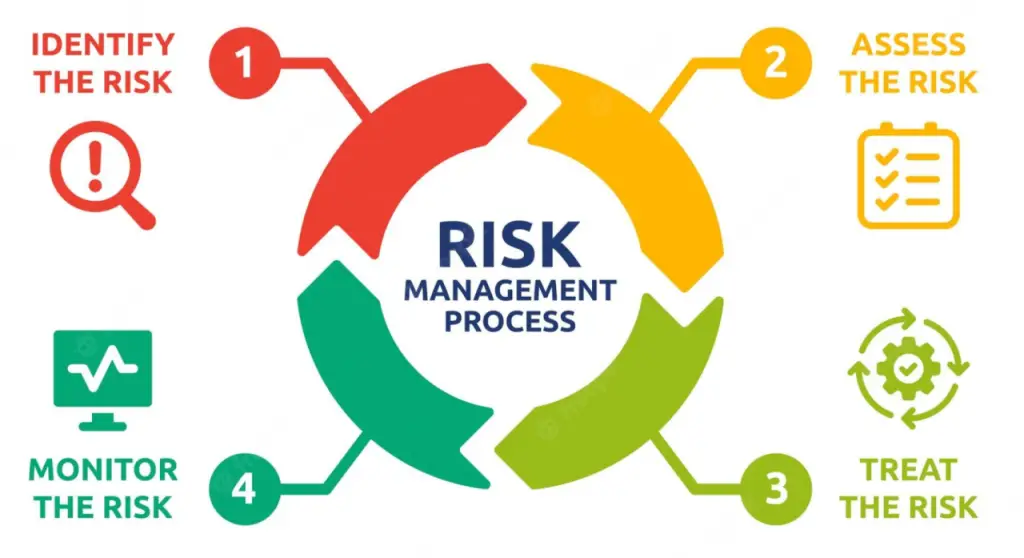
3.1 Risk Identification
- Recognize potential risks that may affect the organization
- Sources include internal operations, external environment, financial markets, technology, and legal changes.
3.2 Risk Assessment (Analysis)
- Evaluate the likelihood of each risk occurring
- Assess the potential impact or severity of the risk
- Prioritize risks based on their significance.
3.3 Risk Response (Treatment)
Organizations can manage risks through:
- Avoidance - Eliminate the activity causing the risk
- Reduction - Take measures to reduce the probability or impact
- Transfer - Shift the risk to another party, such as through insurance or outsourcing
- Acceptance - Accept the risk when it is minor or the cost of mitigation exceeds the benefit .
3.4 Risk Monitoring and Review
- Continuously track identified risks.
- Review the effectiveness of control measures.
- Update risk management strategies as conditions change.
4. Benefits of Risk Management
- Minimizes financial losses
- Improves decision-making
- Enhances organizational resilience
- Increases stakeholder confidence
- Ensures legal and regulatory compliance
- Promotes efficient use of resources
5. Challenges of Risk Management
- Difficulty in predicting all potential risks
- Limited resources and expertise
- Rapidly changing business environments
- Resistance to implementing risk controls
6. Types of Risks
Risks is the chance that an unwanted event or negative outcome will happen, and it is commonly grouped into five core categories in business and program management .
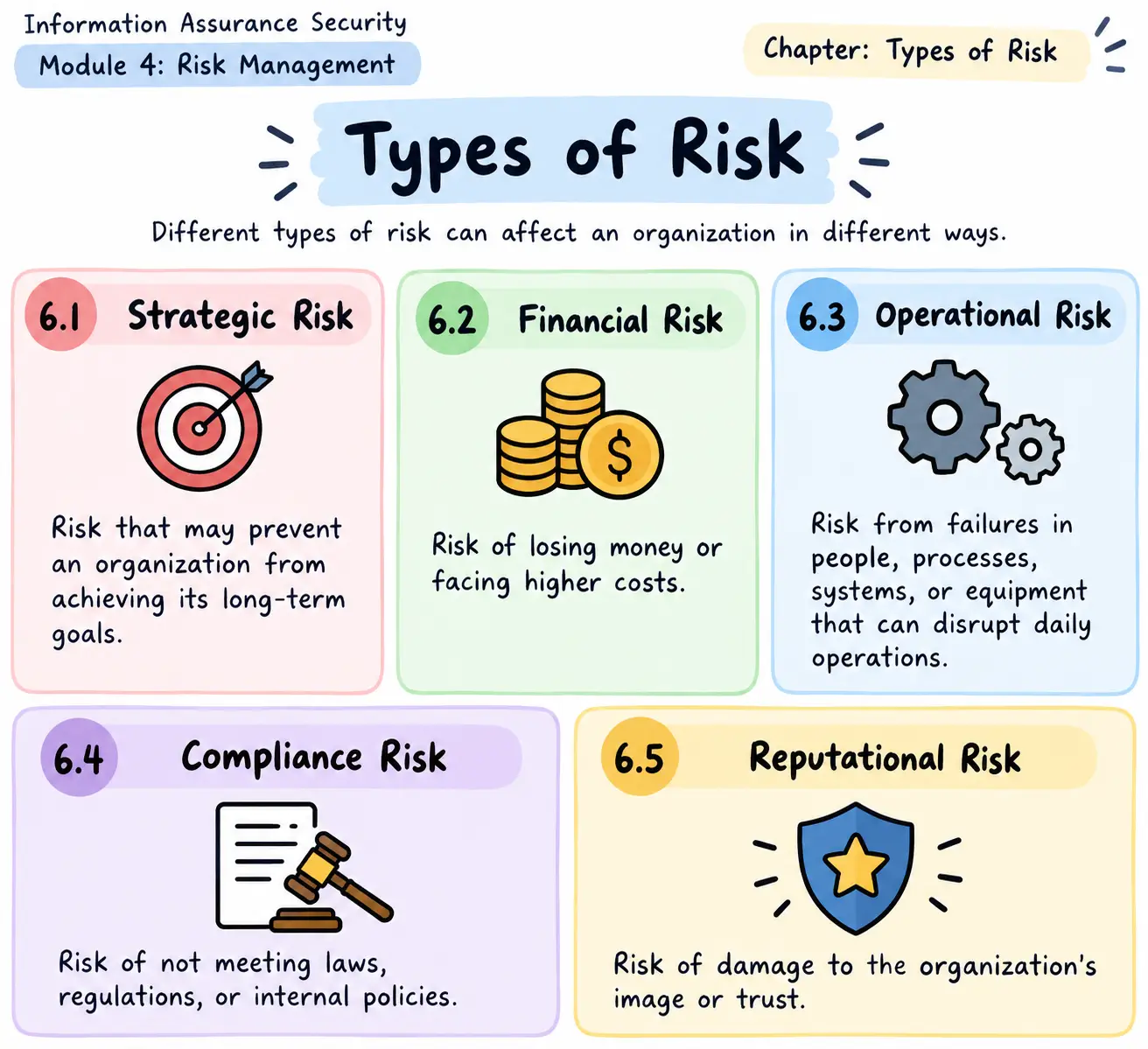
6.1 Strategic Risk
Strategic risk refers to risks that affect an organization's long-term goals, direction,
competitiveness, and ability to achieve its mission.
Components:
• Business Strategy – Risks from choosing an ineffective business strategy.
• Competition – Risks caused by competitors offering better products, services,
or prices.
• Market Changes – Changes in customer preferences, demand, or market
conditions.
• Innovation and Technology – Failure to adopt new technologies or innovations.
• Decision-Making – Poor management decisions that negatively affect the
organization.
• Growth and Expansion – Risks associated with entering new markets,
locations, or industries.
• Leadership – Poor leadership or changes in key management personnel.
Example: A company fails to adopt cloud computing while competitors
successfully use it to reduce costs and improve services.
6.2 Financial Risk
Financial risk refers to the possibility of financial loss or problems
affecting an organization's financial stability.
Components:
• Credit Risk – The possibility that customers or borrowers will fail
to pay.
• Liquidity Risk – Inability to meet financial obligations when they
become due.
• Market Risk – Losses caused by changes in interest rates,
exchange rates, stock prices, or commodity prices.
• Investment Risk – Possibility of losing money from investments.
• Cash Flow Risk – Insufficient cash available for daily operations.
• Fraud Risk – Financial losses caused by fraudulent activities.
• Budget Risk – Spending more than the organization's planned
budget.
Example: A company experiences cash-flow problems because
several customers fail to pay their invoices on time
6.3 Operational Risk
Operational risk results from failures in an organization's internal
processes, people, systems, or daily operations.
Components:
• Process Risk – Ineffective or poorly designed procedures.
• Human Error – Mistakes made by employees.
• Technology/System Failure – Hardware, software, network, or system
failures.
• Cybersecurity Risk – Data breaches, malware, phishing, and other
cyber threats.
• Equipment Failure – Breakdown of machines or other operational
equipment.
• Supply Chain Risk – Problems involving suppliers, transportation, or
availability of materials.
• Business Continuity Risk – Inability to continue operations during
disruptions.
Example: A company's server fails, causing employees to lose access to
important business applications.
6.4 Compliance Risk
Compliance risk is the possibility that an organization will violate laws,
regulations, standards, policies, or contractual requirements.
Components:
• Legal Compliance – Following applicable laws and regulations.
• Regulatory Compliance – Meeting requirements imposed by
government or regulatory agencies.
• Data Privacy – Protecting personal and sensitive information.
• Industry Standards – Following required professional or industry
standards.
• Internal Policies – Ensuring employees follow organizational policies.
• Contractual Compliance – Meeting obligations stated in contracts.
• Ethical Compliance – Ensuring employees and management follow
ethical standards.
Example: An organization improperly handles customers' personal
information and violates data privacy regulations
6.5 Reputational Risk
Reputational risk refers to the possibility that an organization's image, credibility,
or public trust will be damaged.
Components:
• Customer Complaints – Negative experiences reported by customers.
• Negative Publicity – Bad news or unfavorable media coverage.
• Social Media – Negative posts, viral complaints, or inappropriate online
content.
• Employee Behavior – Misconduct by employees that becomes publicly known.
• Product or Service Quality – Poor-quality products or services that disappoint
customers.
• Data Breaches – Loss or exposure of customer or organizational information.
• Ethical Issues – Scandals, corruption, discrimination, or other unethical
practices.
• Leadership Reputation – Actions or statements by executives that damage
public confidence.
Example: A company experiences a data breach, resulting in customers losing
trust in its ability to protect their personal inform
References
Risk-management.PPT
https://online.hbs.edu/blog/post/risk-management
https://purefinancial.com/learning-center/blog/types-of-risk-management/